
English
Views: 0 Author: Steven Publish Time: 2026-11-26 Origin: Site


Hang tags are an important part of clothing packaging and product identification. They display essential information such as brand names, product codes, prices, barcodes, QR codes, care instructions, and the address or name of the clothing manufacturer. For clothing manufacturers, choosing the right hang tag printer can improve production efficiency, reduce printing errors, and support consistent product presentation.
However, not every printing machine is suitable for garment hang tags. Different clothing manufacturers have different requirements for printing speed, tag materials, print quality, variable data, and production volume. For the content below, we will solely dive into the topic of clothing hang tags instead of clothing fabric tags. In case you need to buy a fabric tag printer for clothing, you can check these clothing fabric tag ribbon printers.
A hang tag printing machine is used to print information, branding, or decorative elements onto garment tags and other paper-based product labels.
Hang tags are commonly attached to clothing items using plastic fasteners, strings, or ribbons. They are widely used by clothing manufacturers, fashion brands, garment wholesalers, and retail businesses.
Depending on the production requirements, a hang tag printer machine may support:
· Brand names and logos
· Product names and descriptions
· Size and color information
· SKU numbers and product codes
· Barcodes and QR codes
· Prices and promotional information
· Batch numbers and manufacturer name or address.
For clothing manufacturers, the ideal hang tag machine should be able to handle the required tag materials, printing format, and production workflow.
Different printing technologies are suitable for different hang tag applications. Understanding their differences can help apparel manufacturers select equipment that meets their production needs.

A thermal transfer hang tag printer uses heat to transfer ink from a ribbon onto the printing material. It is widely used for printing product identification information, barcodes, and text on labels and tags.
A thermal transfer printer can be a practical choice for clothing manufacturers that need to print variable information on garment hang tags.
Typical applications include:
· SKU and product identification
· Barcode and QR code printing
· Size and color labels
· Brand and product information
· Production and inventory tracking
Thermal transfer printing is particularly useful when clothing manufacturers need clear, consistent text and machine-readable codes. Learn why.
When selecting a thermal transfer hangtag printer, check its supported media width, print resolution, printing speed, and compatibility with the tag material.

Direct thermal printing creates images by applying heat directly to specially coated thermal paper. It does not require an ink ribbon.
This technology is commonly used for temporary labels and short-term identification applications.
For clothing hang tags, direct thermal printing may be suitable when the tag material is specifically designed for direct thermal printing and the printed information does not need long-term resistance to heat, light, or friction.
Manufacturers should confirm that the selected tag material is compatible with the printer before using this technology for finished garment tags.
Digital color printing is suitable for clothing manufacturers that require colorful designs, detailed graphics, or promotional content on hang tags.
It can be used for printing:
· Brand logos and artwork
· Fashion collection information
· Promotional messages
· Decorative patterns
· Product-specific designs
Color printing is often preferred for premium apparel brands and marketing-oriented hang tags. However, the equipment may involve higher initial costs and different production workflows compared with monochrome thermal printing.
For large-scale clothing production, manufacturers should evaluate whether color printing is needed for every tag or only for selected product lines.
The best hang tag printer machine depends on the manufacturer's production volume, tag design, material, and printing requirements. In other words, what suits your needs will be the best.
For garment factories that mainly print product codes, barcodes, sizes, and variable information, a thermal transfer hang tag printer is often a practical choice.
For fashion brands that need colorful branding and detailed artwork, a digital color printing machine may be more suitable.
The following table provides a simple comparison.
Printing requirement | Recommended machine type |
Product codes and SKU information | Thermal transfer printer |
Barcodes and QR codes | Thermal transfer printer |
Variable data printing | Thermal transfer printer |
Short-term information on compatible thermal media | Direct thermal printer |
Colourful brand graphics | Digital color printer |
Premium promotional hang tags | Digital color printing system |
High-volume garment tag production | Industrial or automated printing system |
For manufacturers with mixed production requirements, a combination of printing technologies may provide greater flexibility. Not many hang tag printers on the market are designed with such a combo. Buying these two types of printers will also do the work.
Before purchasing a garment hang tag printer, clothing manufacturers should evaluate several important factors.
Printing resolution affects the clarity of text, logos, and barcodes.
A higher resolution may be necessary for small text, detailed graphics, or compact QR codes. However, the required resolution should be determined by the actual tag design and barcode specifications. Generally speaking, a 300 dpi hang tag printer meets the standard of producing high-resolution hang tags for clothing. Still, you have the option of choosing a 600dpi model that costs more than the former.
Printing speed is an important consideration for garment factories handling large orders.
A high-speed hang tag printing machine can help reduce production time, but the actual output also depends on tag dimensions, printing content, media handling, and the overall workflow.
When comparing machines, consider the effective printing speed under your production conditions rather than relying only on the maximum speed listed in the specifications.
Clothing hang tags may be made from coated paper, uncoated paper, cardstock, or other materials.
The printer must support the thickness, width, and surface characteristics of the selected tag material.
Some printing machines may require adjustments to the printhead pressure, temperature, or media feeding system when handling thicker tags.
Many clothing manufacturers use hang tags for inventory management and retail product identification.
A qualified hang tag printer should produce clear, readable barcodes and QR codes that can be scanned reliably throughout the supply chain.
It’s advised to get a sample hang tag printer and test the printed codes using the scanning equipment used in your warehouse, distribution center, or retail environment.
Clothing manufacturers often need to print different information on each tag, even when the overall tag design remains the same.
Variable data printing allows manufacturers to change information such as
· Product codes
· Clothing sizes
· Colors
· Batch numbers
· Prices
· Serial numbers
A hang tag printer machine that supports suitable software integration or command-based printing can help automate this process and reduce manual data entry.
For larger garment factories, hang tag printing may be part of a broader production or warehouse management workflow.
The printer may need to connect with a computer, barcode system, ERP software, or other production equipment.
Manufacturers should confirm the available interfaces, supported operating systems, and software compatibility before purchasing a machine.
Standard printing machines may not meet every garment manufacturer's requirements.
For example, some factories use unusually wide hang tags, thick cardstock, custom tag shapes, or automated feeding systems. Others require printing equipment that can be integrated into an existing garment production line.
In these situations, a customized hang tag machine may be more suitable than an off-the-shelf printer.
A customized hang tag printing solution usually includes:
· Adjustable printing width
· Customized media feeding structures
· Special paper thickness support
· Custom printing software or firmware
· Barcode and QR code printing integration
· Customized interfaces
· Automated tag handling
· Private-label branding
Working directly with a custom hang tag printer manufacturer can help clothing manufacturers evaluate the feasibility of these requirements and develop a suitable printing solution.
OEM printing equipment is useful for businesses that need printing machines adapted to their own production processes.
Instead of selecting a standard printer with fixed specifications, manufacturers can discuss customization options with the swing tag printer supplier.
Customization may involve the printer's appearance, mechanical structure, printing width, interfaces, firmware, and software integration.
For garment factories, an OEM hang tag printer can be particularly useful when the printing machine needs to work with existing production equipment or handle specific hang tag materials.
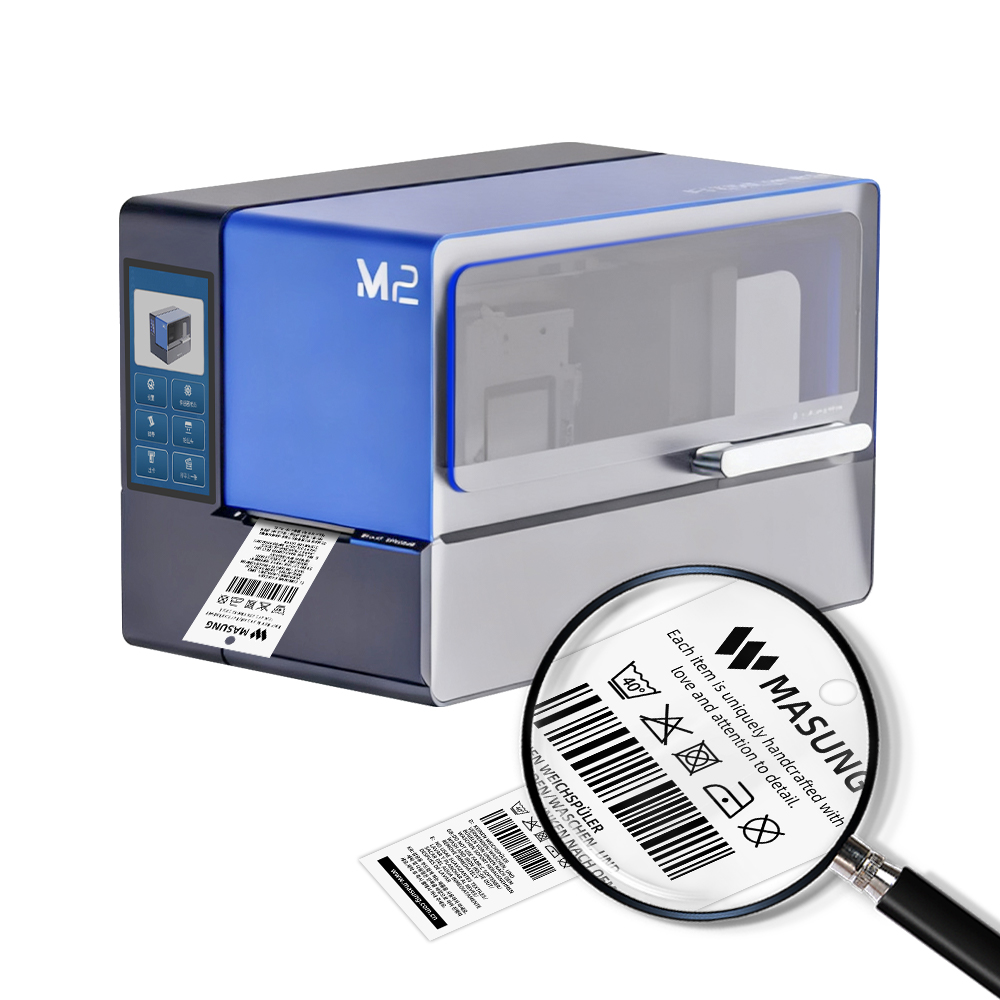
Masung Group is a printer manufacturer offering customized printing solutions for different industrial applications. Its engineering team can discuss project requirements such as media specifications, printing functions and system integration. Moreover, Masung has this MS-CH651-M1-tag Customizable Hang Tag Printer Machine for Printing Custom Hang Tags for Clothing to offer for your consideration:
Choosing the best hang tag printer for clothing manufacturers requires more than comparing printing speed and price. The right equipment should match the tag material, printing content, production volume and workflow of the garment factory.
For manufacturers that mainly print product identification information, barcodes and variable data, a thermal transfer printer is often a practical option. For colourful branding and promotional designs, digital colour printing may be more appropriate.
When standard equipment cannot meet specific production requirements, working with an OEM printer manufacturer can provide greater flexibility in media handling, printing functions and system integration.
By evaluating these factors before purchasing, clothing manufacturers can select a suitable hang tag printing solution that supports efficient production and consistent product identification.

